
The Deadly Library
The Deadly Library is our newest game, and I thought I’d explain what a Freeform Games playtest actually looks like and what changes as a result.
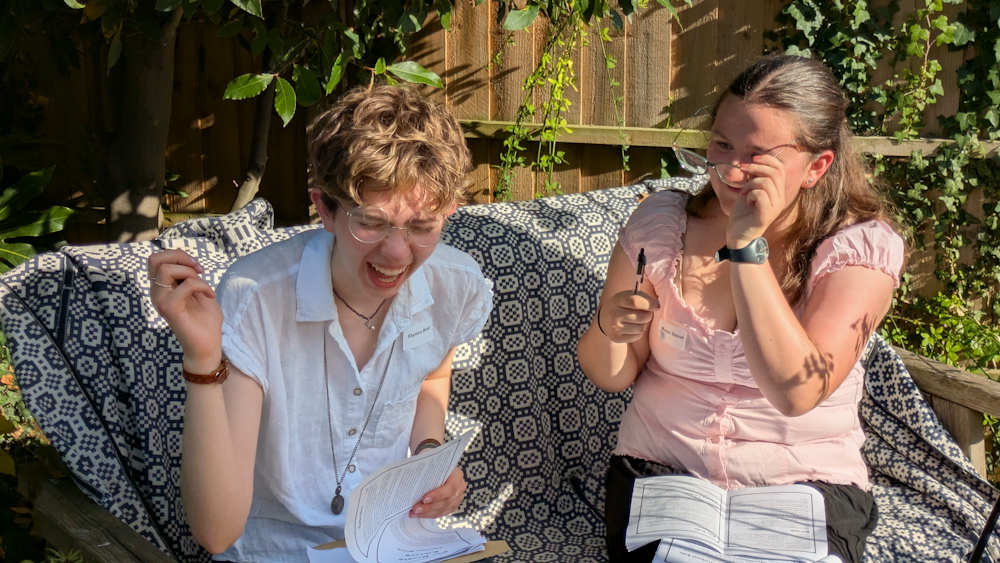
As I write this (some weeks before publication), The Deadly Library is out for playtesting right now. That means that once a game is pretty much finished, we ask for volunteers. (We do this through our newsletter – if you’d like to be a playtester, subscribe!)
In return for getting a free copy of one of our games, we ask for feedback and photos. So it’s a win-win. You get to play one of our games for free with your friends, and we get some useful feedback and photos we can use for publicity.
Running a playtest is pretty much the same as hosting one of our games as normal. The main difference is that we ask our playtesters (and their players) for their feedback. And when I run a playtest, I am alert to anything I feel could improve the experience for the host and players. (I take lots of notes…)
Finding players
My daughter is back from her first year at university, so I asked her if she would like to test The Deadly Library for me. She said yes, and found nine other friends to help – a mix of school friends and uni friends.
(One thing that freeform murder mystery parties are great for is bringing friends from different circles together.)
Preparing The Deadly Library
Preparing a freeform murder mystery game consists of printing the game materials, then assembling the character packets. I’ll also often cast the game in advance and send out character packets (but as you’ll read, I didn’t do that this time).

This is what a fully prepared game looks like. Note that this is A Haunting in Hartwick, as I forgot to take a photograph for The Deadly Library. Oops.
(Note that for playtesting I am using the same materials that a customer would use – I’m not using “special designer-only” playtest materials.)
Printing
I print most of the game on my old black-and-white laser printer, which used to print double-sided. (I really miss duplex printing.)
I print item cards on thin card using my colour inkjet.
Stickers for nametags
A confession: I don’t use the nametags from the cards file. Instead, I use stickers. (You can see them on the envelopes in the photo above.)
I buy address label stickers that work for my printer and create a nametag for each character. I give these to the players as stickers, rather than sourcing a nametag holder. (If you want to do this yourself, the easiest place to grab a list of names is from the introduction file or the game web page.)
I also print a second set of stickers to label the character sheets. (Because I find writing names on envelopes oddly vexing. I’m sure that’s just me, but I do.)
Stuffing envelopes
Once I have my nicely labelled envelopes, I clear a table and lay everything out: character sheets, background sheets, additional information, and so on.
And then I methodically worked through the piles, stuffing the envelopes. (I also use an envelope for the host’s announcements, handouts and items.)
With that done, I took a paper cutter and sliced up the items, then popped them into the relevant envelopes. The Deadly Library doesn’t have money, so I didn’t have to do that.
Casting The Deadly Library
Usually, I cast a game in advance and send out character details ahead of time so that players can come in costume. Because we were away and I had too many other plates to juggle, I decided to cast The Deadly Library on the day.
That meant I didn’t have to worry about precasting and sending out game packets, but it did mean I needed to allow time for the players to read their characters. (Oh, and it meant I didn’t have to worry about no-shows. There weren’t any, but it was nice not to have to worry about them.)
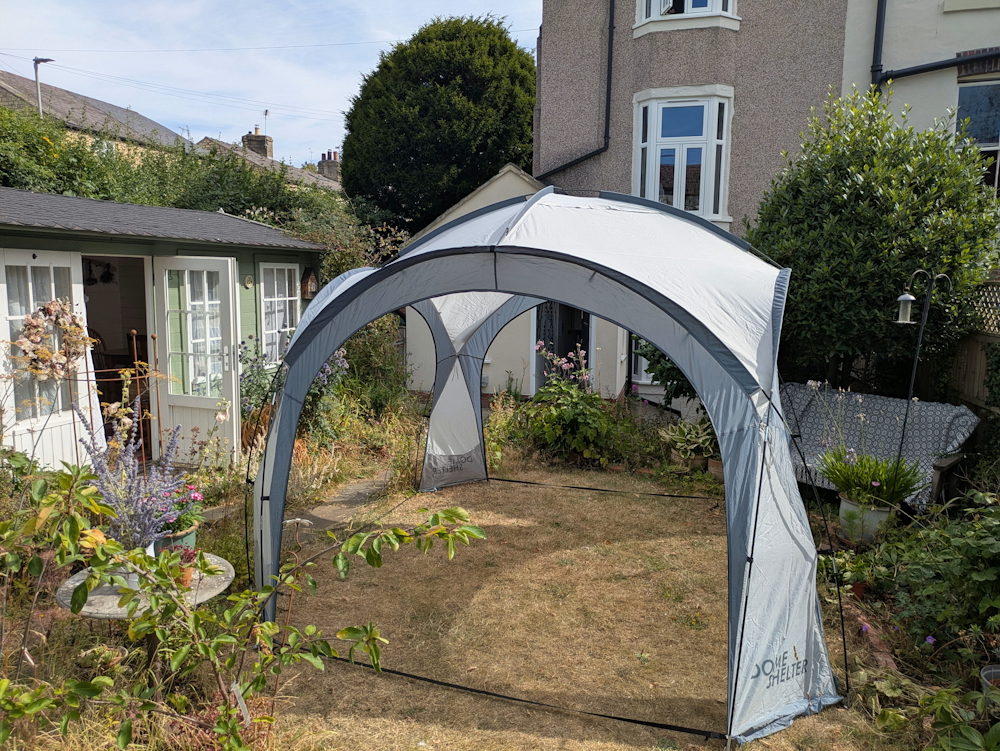
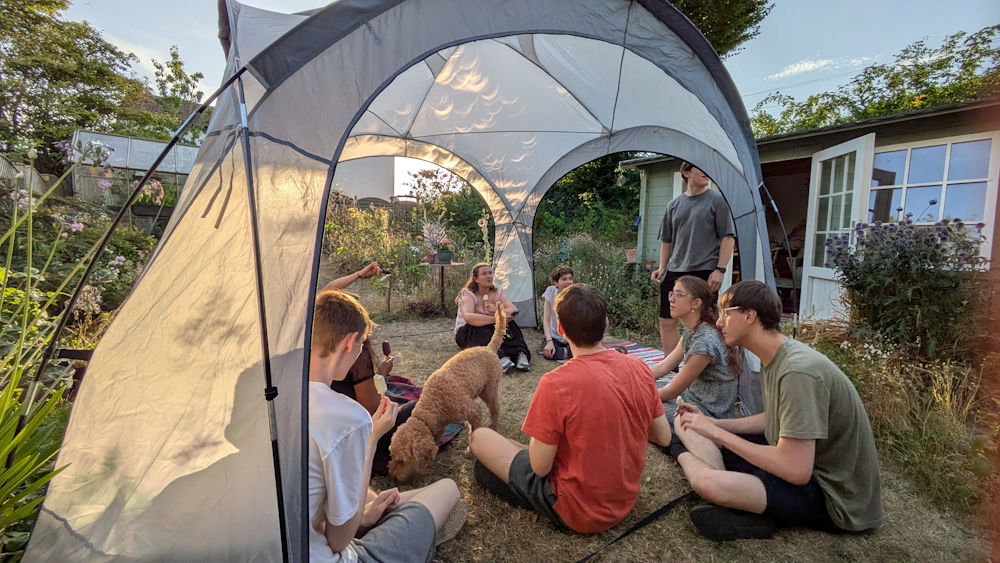
The venue: our garden
I hosted The Deadly Library in our garden (as I have done previously – see here for my Death on the Gambia and Murder on the Istanbul Express photos).
As you can see, we didn’t go for an immersive experience.
(I played the Dark Victorian Mystery playlist from Spotify, which had lots of atmospheric music, but it would have been better had we been inside.)
The main problem we faced was heat, as we were in a heatwave and the temperature was forecast to rise to about 31C. So we erected an event shelter and, as a backup plan, worked out how we could run the game inside if we needed to.
We planned to start the game at about 3 pm, which meant we could serve a pizza tea at about 6-ish.
Running the game
At about 3 pm we started. With all the players in our summerhouse, I cast the game based on what I knew of my daughter’s friends and the characters. Once I handed out the character envelopes, the players all started reading their characters.
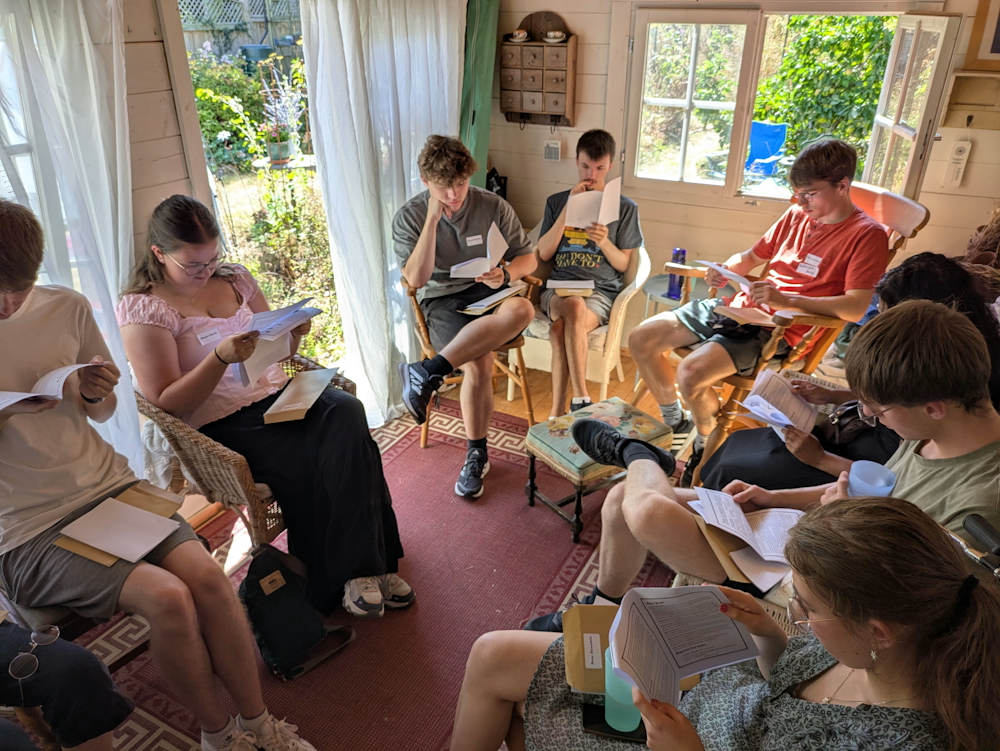
At about 3:15 pm, they had finished reading their characters, so I called everyone together, read through the introduction and asked everyone to introduce themselves.
With the game started and the players interacting with each other, I looked through the timeline in the Quick Reference Sheet and worked out the game times based on the new start time.
During the game
During the game, I spent most of my time dealing with player queries, timed announcements, and managing the archives.
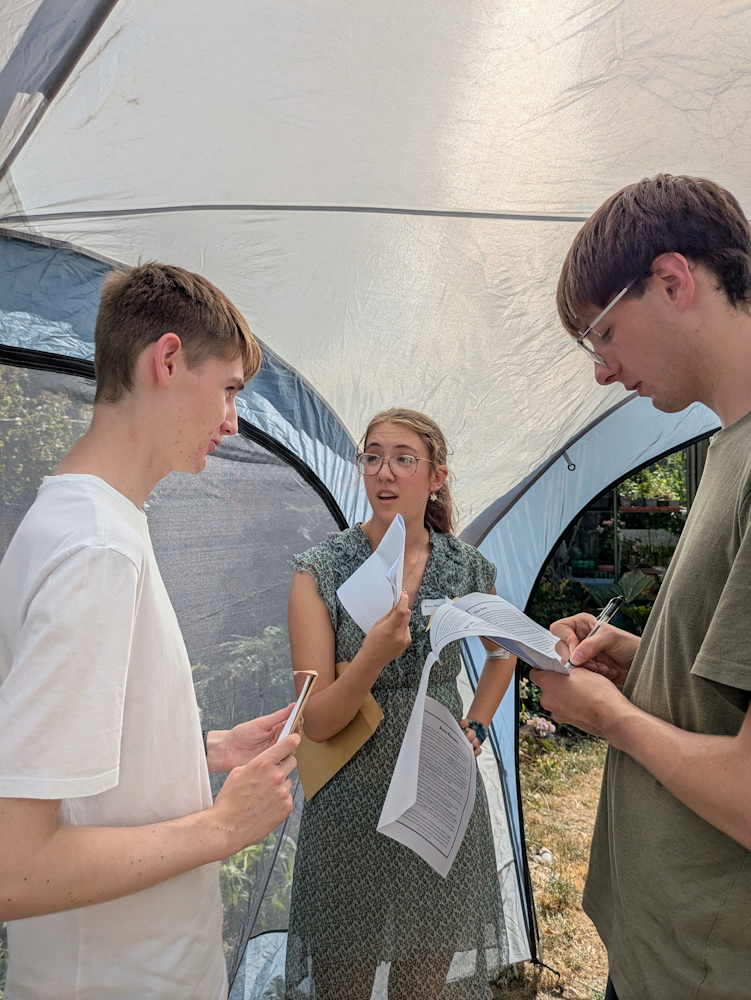
Player queries: Happily, there weren’t too many queries from players. As this was a playtest, a few things needed sorting (typos and mistakes), and one new player needed a bit of direction to get properly going.
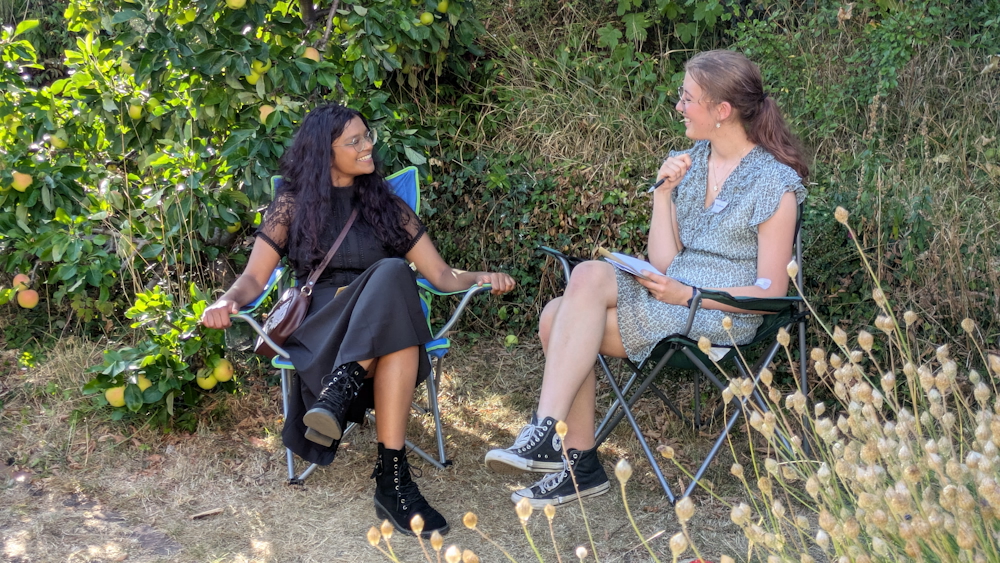
Timed announcements: As with all of our games, The Deadly Library has a few timed announcements. So I would either summon everyone and read out the announcement, or (for some of the simpler announcements), I’d walk around the garden to make sure everyone heard them.
One timed event is particularly exciting in The Deadly Library, as it results in an unexpected death! (Don’t worry, the player who dies receives a new character.)
Managing the archives: The latter part of the game involves managing the library’s archives, which contain ramshackle piles of documents that use a peculiar filing system. And of course, there are lots of documents in that archive that the players want.
I’d created the code and a system to solve it and allow the players to get the documents they were looking for – but this was the first time I had run the system, and I noticed it was a little too hard. I realised the problem as we were playing, and adjusted the code’s difficulty to make it easier for the players to retrieve documents.
The solution
With the game over, I ran through the final announcement, and the detective read out the solution; then we stopped, and we served pizza and tea.
After the game
We played the game on the day of the solar eclipse. So while we chatted in the garden, the moon slipped in front of the sun, and everything got darker. It wasn’t quite a full eclipse, but it still made for a magical end to the game.
The players continued chatting after the game – for hours in some cases. (I always take that as a good sign.)
Playtesting and updating the files
Since this was a playtest, I had a few amendments to make after the game (including the change to the code for the archives discussed above).
One of the challenges of our games is balancing the difficulty.
In this playtest, nobody guessed the murder, and the detectives missed an important clue. So I added a little text to make that clue more prominent – but it’s always a balance between making it too easy and too hard. I don’t want to make that clue too obvious, but it also shouldn’t be impossible to find.
(Of course, another group might have solved the mystery without any problem – and that shows the benefits of multiple playtests.)
So the following day I made those changes and shared the pdf files with the other playtesters. I told them what files had changed, but I didn’t tell them what had changed because I needed them to give me feedback without me prompting them. If I tell them what to look for, I am unlikely to get genuine feedback.
What’s next?
As we’re still in playtesting, I will review the feedback and compare experiences as playtest reports come in. Should a playtester pick up a significant issue, I will update the files and share them again. (Having run The Deadly Library, I am not expecting anything significant at this stage.)
Then, when all the playtesting feedback is in, and I have updated everything, I will finalise the files and publish it!


0 Comments